

 Designer Eyewear
 Dry Eye Treatment

What Is Optical Coherence Tomography?
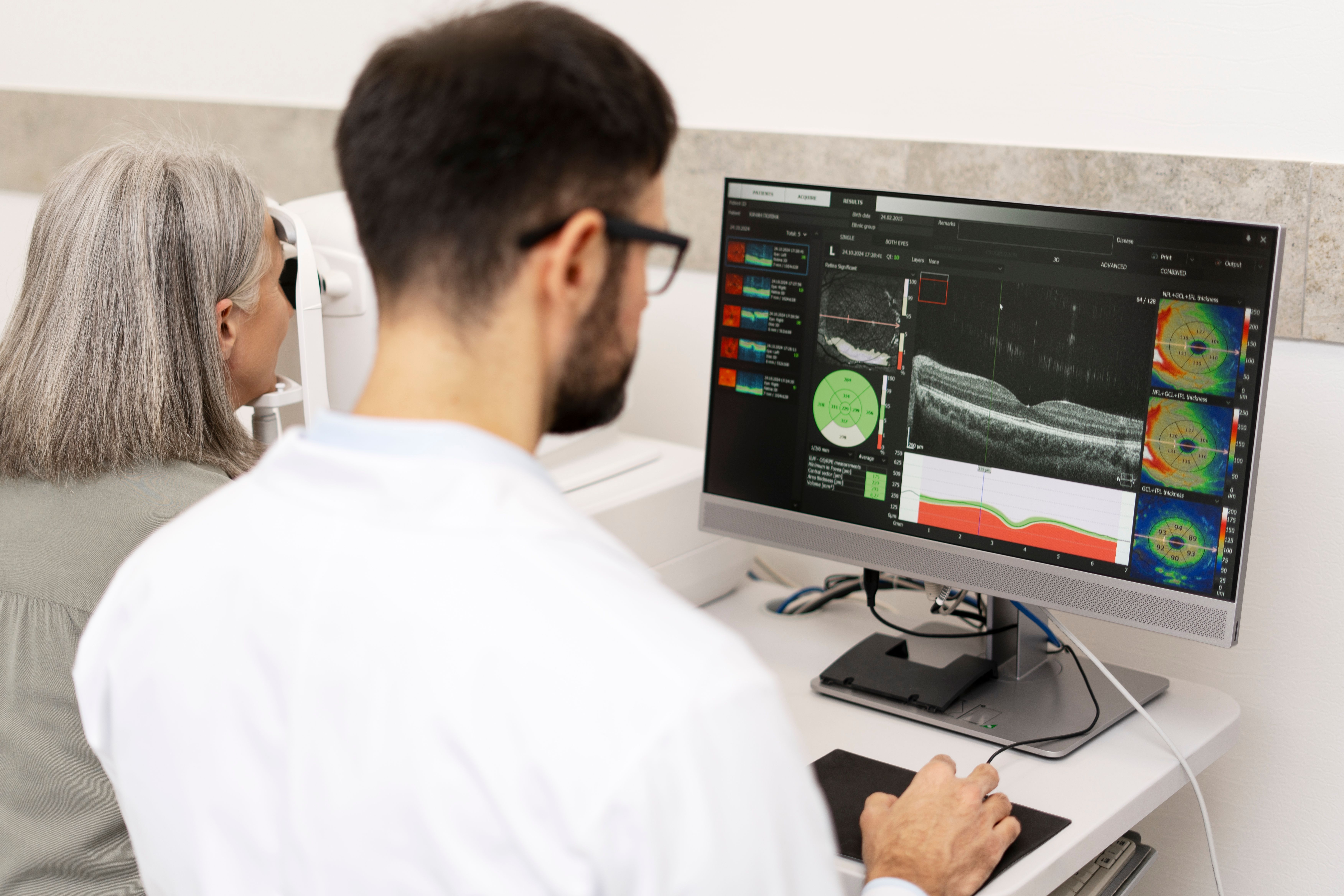
What Is Optical Coherence Tomography?
When it comes to protecting your vision, early detection is everything. Many eye conditions develop gradually and without noticeable symptoms in the early stages. That’s why advanced diagnostic technology plays such an important role in modern eye care. One of the most powerful tools your optometrist can use is Optical Coherence Tomography, commonly known as OCT.
At Texas State Optical, we use leading-edge technology like OCT to get a detailed look at your eye health - often detecting concerns long before they impact your vision.
What Is Optical Coherence Tomography (OCT)?
Optical Coherence Tomography (OCT) is a non-invasive imaging test that uses light waves to take cross-sectional pictures of your retina - the light-sensitive tissue at the back of your eye. Think of it like an ultrasound, but instead of sound waves, OCT uses light to create incredibly detailed images.
These high-resolution images allow your optometrist to see the individual layers of the retina and measure their thickness. This level of detail is critical for identifying early signs of eye disease.
How Does OCT Work?
During an OCT scan:
- You’ll sit comfortably in front of the machine.
- You’ll place your chin on a rest to keep your head steady.
- The device scans your eye without touching it.
- The test is quick, painless, and typically takes just a few minutes per eye.
Because OCT does not require direct contact with the eye and does not involve radiation, it is safe and comfortable for patients of all ages.
What Can OCT Detect?
OCT is an invaluable tool for diagnosing and monitoring a wide range of eye conditions, including:
Glaucoma - OCT helps measure the thickness of the optic nerve fibers, allowing early detection of damage before noticeable vision loss occurs.
Macular Degeneration - By examining the macula (the central part of the retina responsible for sharp vision), OCT can identify changes associated with age-related macular degeneration.
Diabetic Retinopathy - For patients with diabetes, OCT can detect swelling or fluid buildup in the retina - often before vision changes are apparent.
Macular Holes and Retinal Conditions - OCT provides detailed imaging that helps diagnose structural problems in the retina that may require monitoring or treatment.
In many cases, OCT allows your eye doctor to catch issues early, when they are most manageable.
Why Is OCT Important for Preventive Eye Care?
Many serious eye diseases are often referred to as “silent” conditions because they progress without pain or obvious symptoms in the early stages. By the time vision changes are noticeable, permanent damage may have already occurred.
OCT provides a proactive approach to eye health. With detailed baseline images, your optometrist can compare scans year after year to monitor even subtle changes. This makes it easier to detect disease progression early and adjust treatment as needed.
For patients with risk factors such as diabetes, a family history of glaucoma, or age-related eye concerns, OCT is especially valuable.
Who Should Have an OCT Scan?
While not every patient needs OCT at every visit, your optometrist may recommend it if you:
- Are over the age of 40
- Have diabetes or high blood pressure
- Have a family history of glaucoma or macular degeneration
- Are experiencing unexplained vision changes
- Have been diagnosed with a retinal or optic nerve condition
Your doctor will determine whether OCT is appropriate based on your individual risk factors and eye health history.
Protect Your Vision with Advanced Imaging
Optical Coherence Tomography is one of the most advanced tools available in modern eye care. By providing detailed, cross-sectional images of the retina and optic nerve, OCT allows for early detection, accurate diagnosis, and ongoing monitoring of serious eye conditions.
If it’s been a while since your last eye exam - or if you have risk factors for eye disease - schedule an appointment with Texas State Optical today. Visit our office in Kerrville, Texas, or call (830) 257-6336 to schedule an appointment.
Quick Links
Helpful Articles
article_category: products
article_category: psychiatry
article_category: faqs
article_category: cats
article_category: general
article_category: services
article_category: technology
article_category: dogs
article_category: restorative
article_category: vision therapy
article_category: contact lenses
article_category: health
article_category: conditions
article_category: eye surgery co-management
article_category: exotic
article_category: cosmetic
article_category: surgical procedures
article_category: aesthetics
article_category: preventative
article_category: ocular disease management
article_category: eyeglasses
article_category: eye health
article_category: large animal
[]
article_category: psychiatry
article_category: faqs
article_category: cats
article_category: general
article_category: services
article_category: technology
article_category: dogs
article_category: restorative
article_category: vision therapy
article_category: contact lenses
article_category: health
article_category: conditions
article_category: eye surgery co-management
article_category: exotic
article_category: cosmetic
article_category: surgical procedures
article_category: aesthetics
article_category: preventative
article_category: ocular disease management
article_category: eyeglasses
article_category: eye health
article_category: large animal
[]
Flowbite is an open-source library of interactive components built on top of Tailwind CSS including buttons, dropdowns, modals, navbars, and more.
Check out this guide to learn how to get started and start developing websites even faster with components on top of Tailwind CSS.

All Eyecare Services
We offer a wide variety of eye care services to the Kerrville community. Contact us with any questions about our services.

Keep In Touch
For non-urgent questions or to learn more about our services, contact us today!

Contact Information
Office Hours
- Monday 8:30 AM - 5:30 PM
- Tuesday 8:30 AM - 5:30 PM
- Wednesday 8:30 AM - 5:30 PM
- Thursday 8:30 AM - 5:30 PM
- Friday 8:30 AM - 5:30 PM
- Saturday Closed
- Sunday Closed
- Monday 9:00am - 6:00pm
- Tuesday 9:00am - 6:00pm
- Wednesday 9:00am - 6:00pm
- Thursday 9:00am - 6:00pm
- Friday 9:00am - 6:00pm
- Saturday 10:00am - 2:00pm
- Sunday Closed
- Monday 8:00am - 5:00pm
- Tuesday
- Wednesday
- Thursday
- Friday
- Saturday
- Sunday
© 2026 Texas State Optical. All rights Reserved - Accessibility Statement - Privacy Policy - Sitemap
Managed and Designed by 